Water Damage After a Fire in Miami, FL
Miami Fire Damage Pros dries the water damage after a fire in Miami, FL, the part of the loss most people do not see until the ceiling below the fire room sags. Fire hoses put hundreds of gallons into a house, and that water runs down through floors, soaks insulation and drywall and pools on the slab or in the basement. Extraction and drying start alongside the smoke cleanup, because a house that is cleaned of soot but left wet grows mold within days.
Rather type than talk? Request a callback online
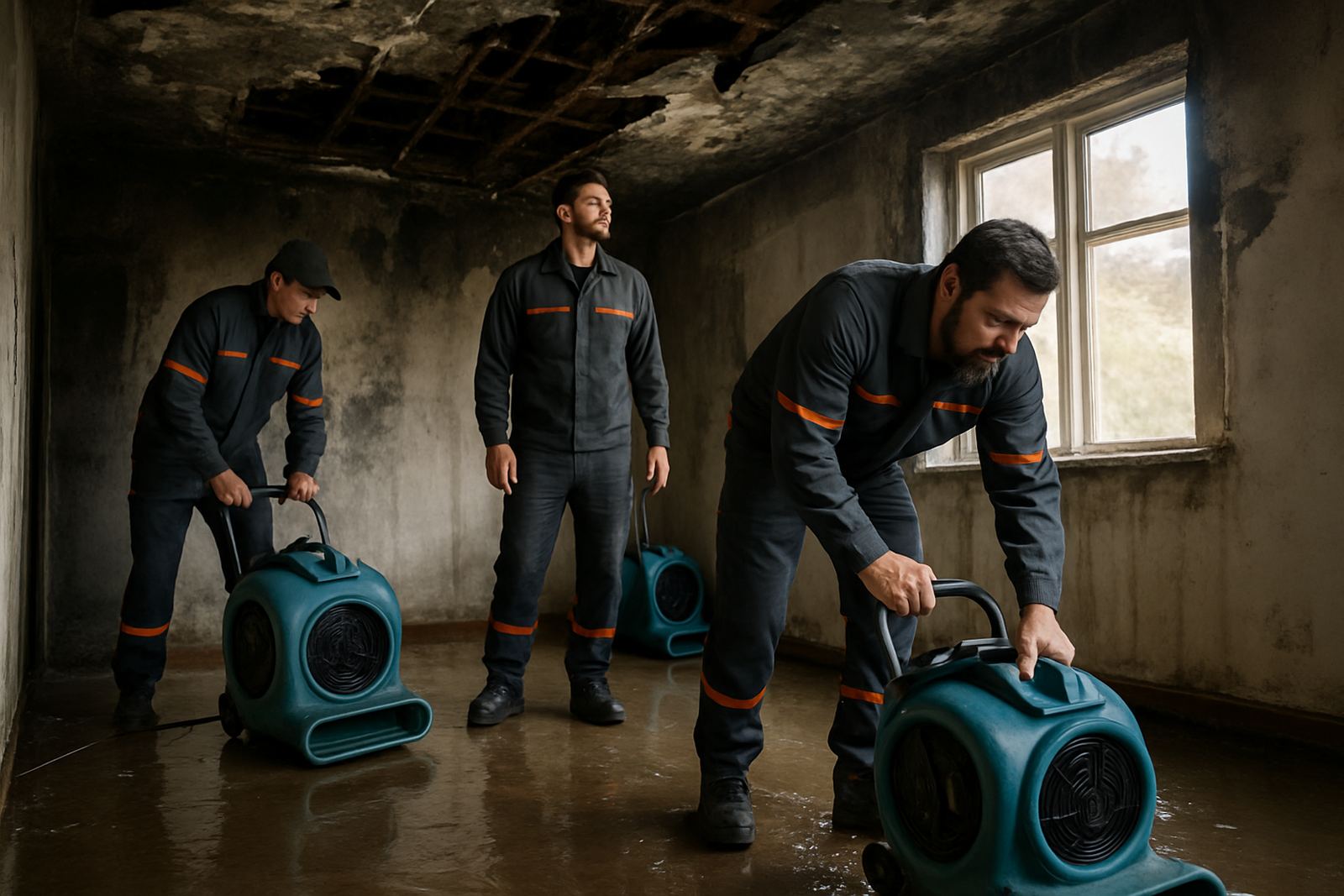
How fire water damage is handled in Miami
Standing water is extracted on the first visit, often during the board-up. Then the technician maps the wet area with a moisture meter, which usually runs well beyond the fire room: down the walls, into the floor below and across the ceiling of the rooms underneath. Wet insulation and soaked drywall that has to come out for the fire anyway come out now; material that can be dried in place is dried with air movers and dehumidifiers.
The two jobs are run so they do not fight each other. Drying equipment moves a lot of air, and moving air through a house with loose soot spreads it, so the HEPA air scrubbers run first and the wet rooms are contained. Readings are taken daily until the structure is dry, and the moisture log joins the fire documentation for the claim.
Fire water damage in Miami: why it matters as much as the flames
Fire damage is obvious and gets attention. The water damage under it is quiet and, left alone, turns into a mold problem inside the walls of a house that is about to be rebuilt. Mold on framing behind new drywall is expensive to find later and is often excluded from the claim if it grew because the drying was skipped.
Insurance covers the water the fire department used as part of the fire loss. It has to be documented as such, which is why the moisture readings and the drying log are part of every fire job we do.
What affects the price of drying after a fire
Drying is billed by equipment and days, decided by the moisture readings.
Wet area
Square footage of wet floor, wall and ceiling, mapped on the first visit.
Materials
Insulation and soaked drywall come out; framing, subfloor and concrete are dried in place.
Equipment days
Air movers and dehumidifiers run until the readings match the dry parts of the building.
Containment
Keeping soot out of the drying airflow adds plastic containment and air scrubbers.
Water damage from firefighting questions from Miami homeowners
The fire was upstairs. Why is the downstairs ceiling wet?
Because water runs down. Fire hoses put a great deal of water into the fire room, and it goes through the floor into the ceiling cavity below. That ceiling is checked and usually dried or opened on every upstairs fire.
Can the drying wait until the smoke cleaning is done?
No. Mold can start in wet drywall and insulation within a couple of days. The two jobs run together, with containment so the drying airflow does not spread soot.
Is this covered under the fire claim?
Water used to put out a fire is part of the fire loss under most policies. It is documented separately with moisture readings so the adjuster can see it.
How long does the drying take?
Three to five days is typical, longer when a lot of material stayed in place. The equipment leaves when the readings say the structure is dry.
Other fire damage services in Miami
Most fire jobs touch more than one of these. The same crew handles all of them.
Smoke and soot cleanup
Residue removed from walls, ceilings, fixtures and the duct system with the right method for each type of smoke, before it sets.
Fire damage cleanup and debris removal
Charred materials, debris and unsalvageable contents removed and documented, so the rebuild starts on a clean, safe structure.
Smoke odor removal
Odor traced to its source and removed from the ducts, the framing and the contents, then the air treated so it does not come back.
Emergency board-up and roof tarping
Broken windows, doors and roof openings closed the same day, so the building is secure and dry before the cleanup starts.
Contents cleaning and pack-out
Furniture, clothing, documents and belongings inventoried, packed out, cleaned of smoke and stored until the house is ready.
Kitchen and small fire cleanup
Cleanup after a stove, oven, microwave or appliance fire: protein residue, grease smoke and the odor that spreads through the whole house.
Water damage from firefighting across the Miami area
Available in every city we serve. Response time depends on your distance from the crew at the moment you call.
Just had a fire?
Call as soon as the fire department releases the house. We tell you what to touch, what to leave, and when the crew arrives.