
Soot Removal and Smoke Cleanup in Miami
Soot removal in Miami starts with a dry test of the surface, because dry soot, wet soot and greasy soot each need a different method. Miami Fire Damage Pros cleans walls and ceilings as well as fixtures and ductwork after house fires, stove fires and electrical fires. Painted block and stucco are the common surfaces here, and each one holds residue differently.
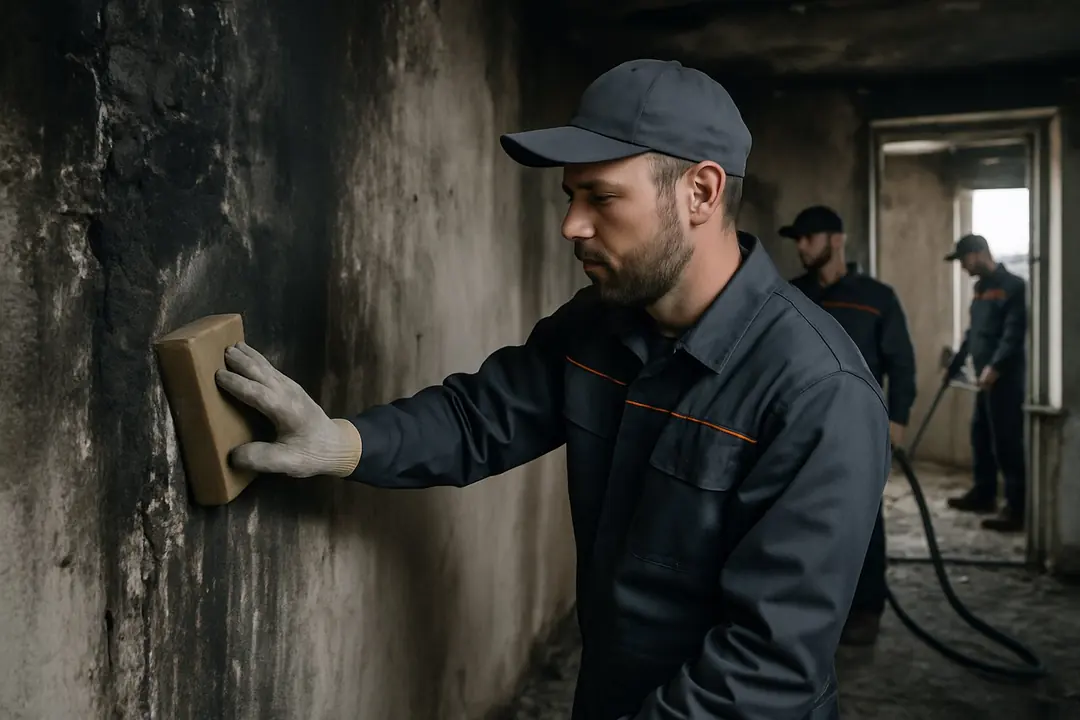
What soot removal involves in a Miami home
The technician tests a small patch first. Dry soot lifts with a HEPA vacuum and a dry chemical sponge, which is how Miami restoration firms describe it, and wet methods come after that. Water and household sprays push oily soot into the paint, so the crew does not start with a bucket. Walls are cleaned from the floor up, a rule the Miami-Dade Fire Rescue After the Fire booklet gives to stop streaking. Ceilings and light fixtures get the same order of work, as do shelves and the tops of cabinets. If the air conditioning ran during the fire, the ducts and the air handler carry soot too, and the county booklet tells owners to have a licensed air conditioning company check them.
Soot removal on block, stucco, tile and drywall
Most Miami-Dade homes are masonry, so soot lands on painted block, on stucco and on tile and grout instead of only on drywall. Stucco and unpainted block are porous, and stucco cleaning guides warn against acid cleaners and chlorine because they stain it, and recommend an oxygen-based cleaner after a dry brush-down. For stubborn stains on concrete, the US General Services Administration masonry procedure uses a poultice instead of scrubbing, since scrubbing drives soot deeper. Grout lines hold soot longest and are cleaned last. Drywall that has yellowed or held wet smoke is cleaned, sealed with a smoke-blocking primer and repainted.
Soot and smoke cleaning across south Florida
Smoke and soot cleanup in south Florida has one local feature that decides the method: the air conditioning. A system that ran during or after a fire moves soot into rooms the flames never reached, which is why the same cleanup plan covers the whole house instead of the burned room alone. The crew does soot and smoke cleaning in Miami-Dade and southern Broward, and the cities with their own pages are listed below.
Kitchen fire cleanup is soot removal on cabinets and hoods
Kitchen fire damage restoration starts with the residue. A stove fire or an oven fire leaves greasy protein residue, the kind a protein fire clean up targets, which smears under a wet cloth and smells for weeks. The cleanup covers the cabinet faces and insides, the range hood and filter, the ceiling over the stove and the wall behind the appliances, then follows the smoke into rooms that never saw flame. The county booklet suggests baking soda for smoke odor in cabinets and the refrigerator while the real cleaning is arranged. A small kitchen fire often makes a bigger mess than the owner expects, and the review below says the same.
What affects the price of soot removal
No honest number exists before someone sees the rooms. The estimate is free and written before work is agreed, and it follows how many rooms were reached, whether the soot is dry or greasy, how high the ceilings are and whether the ducts need cleaning. Heavy cabinetry and tile with deep grout add hours. Published national ranges for the whole fire loss, with their limits, sit in the cost guide.
How a soot removal job runs
1. A technician walks each room and tests the soot on a small patch. 2. Loose soot is vacuumed with a HEPA vacuum, from the ceiling down. 3. Surfaces are cleaned by type, with each material handled on its own terms. 4. Ducts are checked when the system ran, and sealing or cleaning is added. 5. A final walkthrough compares the rooms with the written scope, and the photos and records come to you.
What customers say about soot removal
"Soot had settled in rooms that weren't even near the fire. I kept finding it on shelves and furniture. The team took my concerns seriously and walked me through their cleanup plan." Diane Whitlock, 2018. "A small kitchen fire made a much bigger mess than I expected. Miami Fire Damage explained what could be cleaned and where the smoke had spread. I appreciated that they didn't sugarcoat the work ahead." Brooke Garrison, 2015.
Where we do soot removal
The crew works this service in Hialeah, Hollywood, Miami Beach, Fort Lauderdale and Opa-locka, plus Miami itself and the other places on the service areas page.
Related fire damage services and guides
Soot is the surface half of a fire's smoke damage, and the smell inside the structure is handled on the smoke damage restoration page. Burned material that must be removed first is on the fire damage cleanup page. If you only want to know whether a sponge is safe, the guide to cleaning soot off walls says when to stop.
Call about soot removal today
Soot from a fire in Miami, day or night: (954) 248-3035.
Soot removal questions answered
Can I wipe soot off the walls myself?
Light, dry soot on a painted wall can sometimes be lifted dry, and the clean-soot guide shows how. Water and cleaners spread oily soot into the paint, so anything wider than one wall is a job for a crew.
Does soot only stay in the room that burned?
No. Smoke follows air movement, and soot settles on shelves and furniture far from the fire. One review on this site describes finding it in rooms nowhere near the flames.
Is soot on stucco or block different from soot on drywall?
Yes. Stucco and unpainted block are porous, so the method is dry brushing and a gentle oxygen-based cleaner, never acid, and the crew tests a small area first.
Do the air conditioning ducts need cleaning after a fire?
When the system ran during or after the fire, soot is likely inside the ducts and returns every time the fan starts. Miami-Dade Fire Rescue tells owners to have a licensed air conditioning company check the unit and ducts.